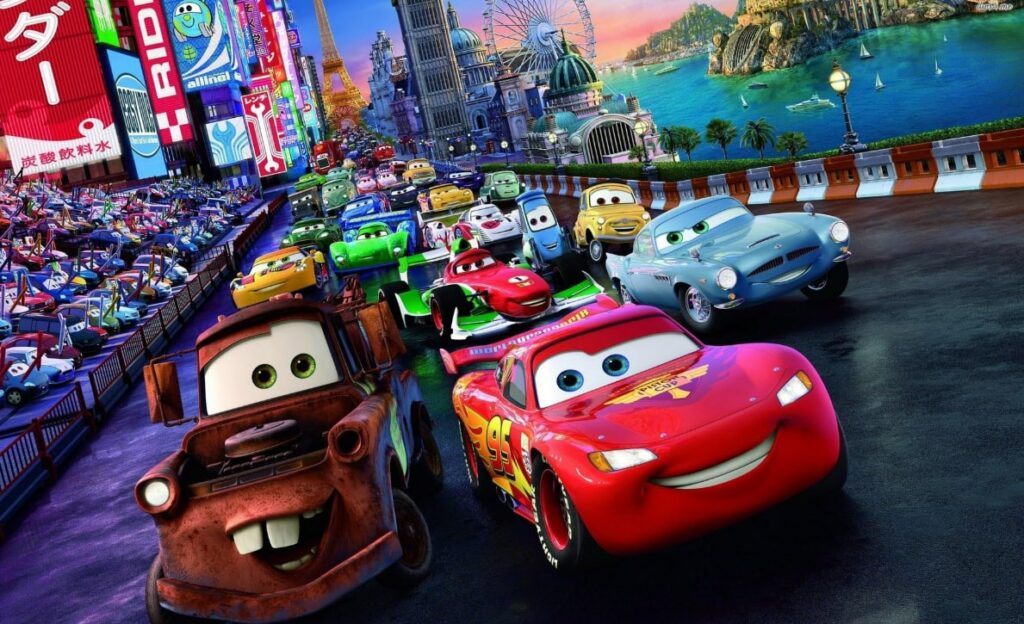
Critique of the Cars saga: This article covers the complete story and all the details for fans of the series.
| Film | Release date | Worldwide box office | Approximate number of viewers |
|---|---|---|---|
| Cars | June 9, 2006 | 462 million dollars | 46 million |
| Cars 2 | June 24, 2011 | 559 million dollars | 55 million |
| Cars 3 | June 16, 2017 | 383 million dollars | 38 million |
Behind the scenes of the Cars saga: A story that goes from a toy empire to a lost America
The Cars saga is often seen as a simple children’s franchise, but behind the scenes it contains some of Pixar’s strangest and boldest decisions. Let’s get straight to the point and break down the most striking details.
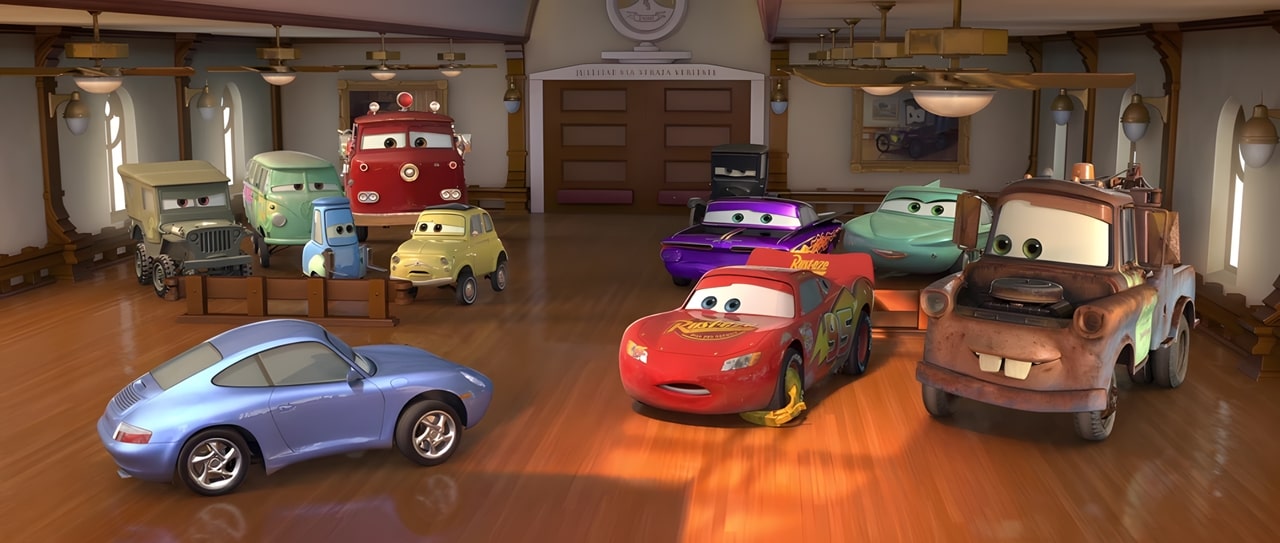
Cars is the only Pixar saga designed more for toys than for the box office. While the film earned strong theatrical revenues, its real success came from toys and merchandise.
For Disney, Cars was above all a long-term branding strategy rather than a purely cinematic project. As a result, the saga follows a simpler narrative structure than most other Pixar films.
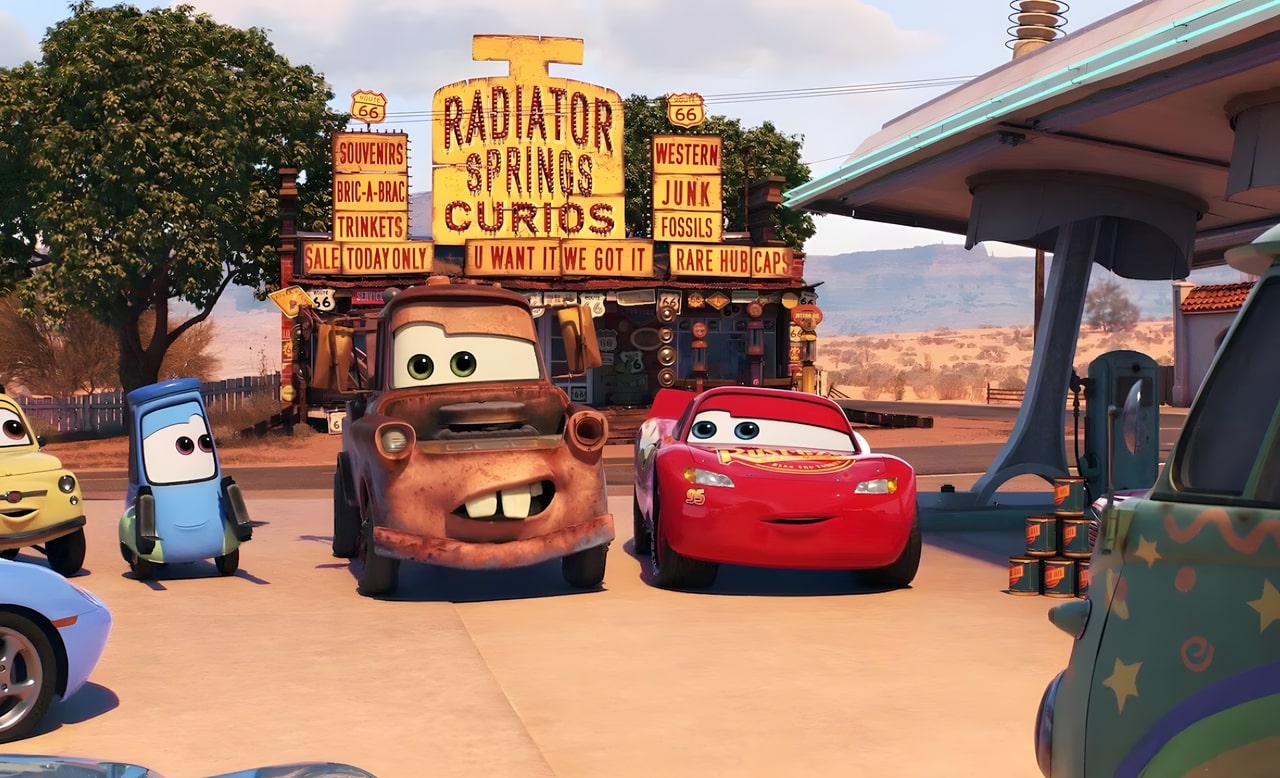
The town of Radiator Springs is not entirely fictional. It is inspired by real abandoned towns along Route 66. The Pixar team traveled the entire road, carefully studying closed gas stations and empty motels.
The melancholy that runs through the film is no accident; it deliberately reflects the vanished face of rural America.
The character of Doc Hudson is inspired by a real legend. The Hudson Hornet, a famous 1950s racing car, dominated the circuits before fading into obscurity.
Doc’s feeling that one day you’re celebrated, the next you’re forgotten mirrors the harsh reality of the world of sports.
Why does McQueen have 95? What does 95 mean in cars? Other interesting details
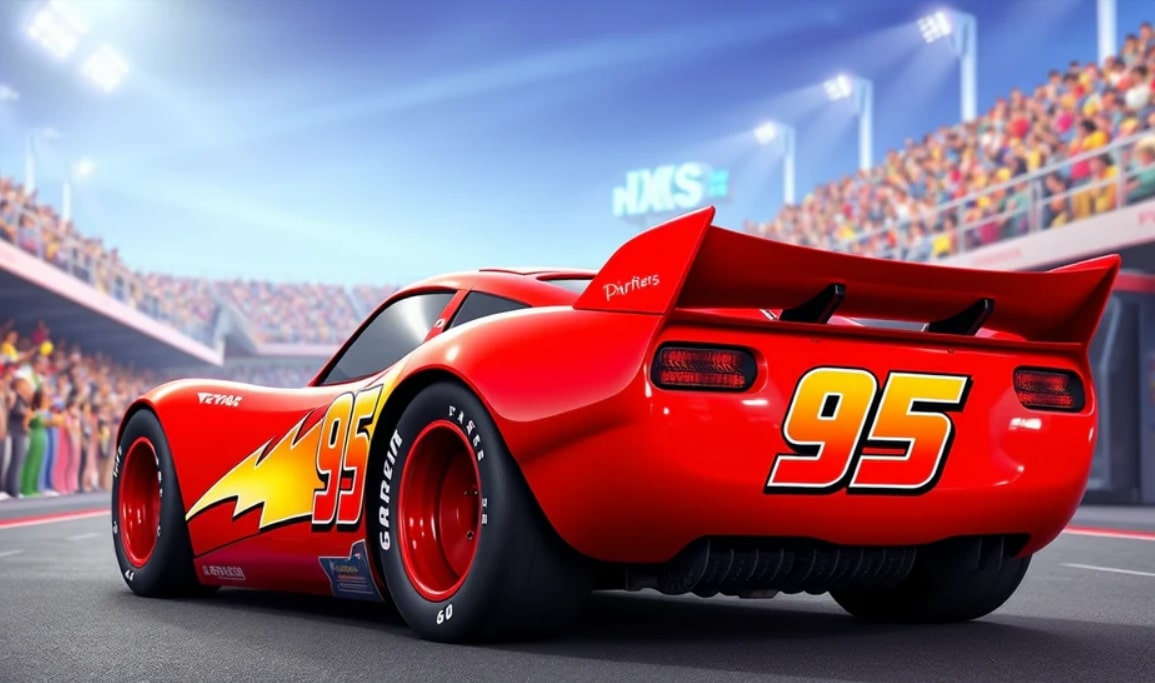
The number of Lightning McQueen, 95, is an internal Pixar joke. It refers to 1995, the year production began on Toy Story. These numerical references are common in Pixar films, but Cars offers one of the clearest examples.
Cars 2 is known for being the most controversial film in Pixar’s history. Serious disagreements arose within the studio regarding the film’s tone and target audience.
The espionage-focused plot felt disconnected from the rest of the saga and was therefore considered by critics to be Pixar’s weakest film.
In Cars 3, Lightning McQueen’s aging is a theme Pixar rarely addresses with such candor. The film motivates children while reminding adults that glory has its limits. This is why Cars 3 is considered by many adult viewers to be the most moving film in the saga.
Another notable detail: in the Cars universe, humans have never existed. Cars are not just a means of transportation; they embody civilization itself. This deliberate choice makes this universe one of the few where Pixar created a world from scratch.
Cars is a series that seems simple on the surface, but it contains a profound message. Behind a story of speed, success, and competition lies a message of slowing down and becoming more aware. This is what makes it one of those animated series whose meaning only deepens with each passing year.
Who is the Cars film series aimed at?
At first glance, Cars gives the impression of being a classic children’s film. With its bright colors, endearing characters, and simple humor, it specifically targets young viewers.
From this perspective, it’s perfectly suited for children aged 4 to 9. The story is clear, the distinction between good and evil is easy to grasp, and the pacing doesn’t bore children. For children passionate about cars, Cars exerts an almost innate appeal.
However, Cars’ target audience isn’t limited to children. Beyond appearances, the film contains a powerful message that also speaks to adults.
Those who lead career-driven lives, who are constantly in a hurry, who equate success with speed, and who believe that slowing down means regressing, will recognize themselves in the film.
Lightning McQueen’s journey challenges this mentality and acts as a mirror, subtly engaging the viewer.
Why did viewers over 30 years old love the Cars movies?
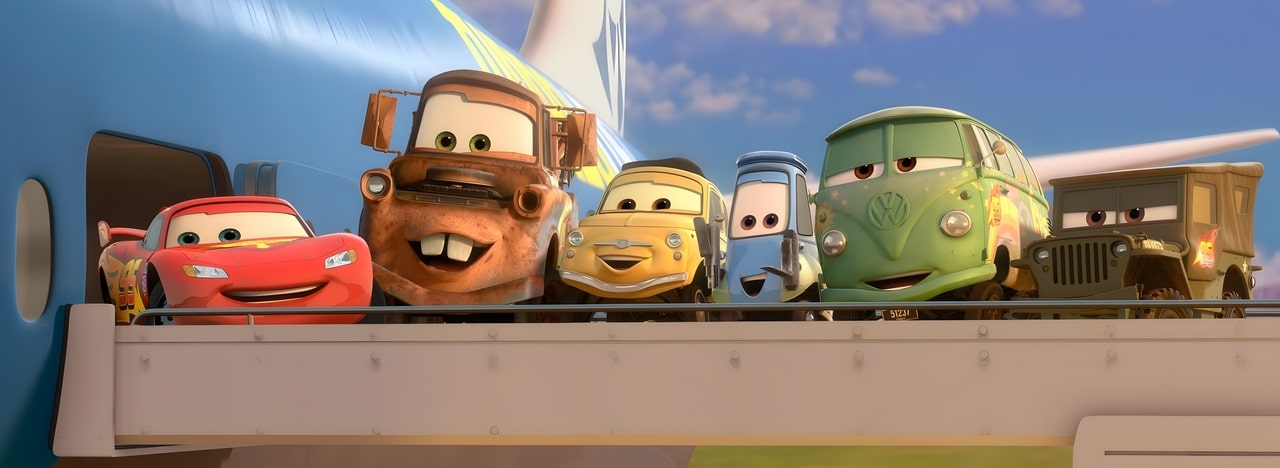
Viewers over 30, in particular, perceive Cars very differently. The Route 66 theme, the forgotten towns, the quiet disappearance of iconic film figures, and the feeling of abandonment resonate more with adults than with children.
The character of Doc Hudson symbolizes all those who, once at the top, have been sidelined by the system. This depth often goes unnoticed on the first viewing but is fully revealed on the second.
Cars 2, the second installment in the saga, departs from this approach. Action-oriented, with its dynamic editing and striking visual impact, it appeals more to children and young viewers.
For adults seeking thematic intensity and emotional subtlety, this film is generally disappointing.
Cars 3, on the other hand, reconnects with adult audiences. The themes of aging, the fear of succession, and the feeling of no longer measuring up are directly linked to the adult world. This film inspires children while offering adults a realistic and moving confrontation.
Overall, the Cars film series is not just a simple cartoon intended to entertain children. Its narrative becomes more complex with age, questioning the notions of time and success.
In this respect, it is one of the few animated series that resonates with both children and adults on different levels.
The complete story of the Cars saga: Friendship, Brotherhood, and Perseverance
Cars is much more than just a children’s film; it’s an animated legend where speed, competition, and the pace of life intertwine. In this video, I present the complete story of the Cars movie, the emotional journey of the characters, and the human themes that underpin the narrative, all in a captivating 27-minute story.
Beyond the dazzling racetracks, the trio of friendship, brotherhood, and perseverance makes this saga much more than just a racing story.
Lightning McQueen’s story is a journey that begins with loneliness and transforms into genuine connections. The relationships he forges with the residents of Radiator Springs teach him to resist the frenetic pace of modern life, to appreciate the value of time, and to understand the power of collective learning.
Doc Hudson’s past shows that experiences aren’t just about accumulating medals; they also leave scars on the soul (of people as well as cars).
This story isn’t just about victories on the racetrack. Cars offers viewers a profound reflection on self-knowledge and understanding one’s origins. The video explores the thematic evolution of the saga, the characters’ inner conflicts, and the life lessons that each film delivers.
Join this visual journey by clicking on the video below: The complete story of the Cars saga
Cars movie series review our article ends here. You can read our previous article, Top Best Movies to Relax.